

You've got money sitting in a brokerage account or a 401(k), and three letters keep showing up everywhere — FXAIX, VOO, SPY.
All three claim to be "the S&P 500." All three basically are.
So why does picking one feel harder than it should? Let's settle it.
Before we go further, a quick stop. If you're still figuring out where investing fits into your overall money plan, how to budget as a beginner walks through that foundation, and the difference between real estate and stocks is worth a look if you're weighing where extra cash should go first.
What FXAIX, VOO, and SPY Actually Are
Strip away tickers and jargon. Each of these is a basket holding roughly 500 of America's largest publicly traded companies — Apple, Microsoft, Nvidia, Amazon, and hundreds more — sized according to how big each company is.
Buy one share, and you own a tiny sliver of all 500.
FXAIX is a mutual fund. VOO and SPY are ETFs (exchange-traded funds). That single distinction explains almost every practical difference between them.
A mutual fund prices once a day, after markets close. An ETF trades all day long, like a stock, with a price that moves minute to minute.
Cost Is Where This Gets Interesting

A number genuinely surprised me first time I looked it up properly.
FXAIX charges an expense ratio of 0.015%. VOO charges 0.03%. SPY charges roughly 0.0945% — about three times VOO's cost and six times FXAIX's.
Sounds tiny. It isn't, once you let time work on it.
| Fund | Type | Expense Ratio | Yearly Cost on $50,000 | Rating |
|---|---|---|---|---|
| FXAIX | Mutual Fund | 0.015% | $7.50 | ⭐⭐⭐⭐⭐ |
| VOO | ETF | 0.03% | $15.00 | ⭐⭐⭐⭐⭐ |
| SPY | ETF | 0.0945% | $47.25 | ⭐⭐⭐⭐ |
That's not a misprint. SPY's $47 versus FXAIX's $7.50 — same index, same companies, same returns before fees.
A $6 yearly difference between VOO and SPY on $10,000 invested adds up for long-term investors who accumulate hundreds of thousands of dollars over time.
Now stretch that across 25 or 30 years of compounding, and that "small" gap stops being small.
A Quick Look at What That Gap Becomes Over Time
That's not magic. That's just what fees do when you give them three decades to work.
Mutual Fund vs ETF — Why Structure Matters More Than People Think
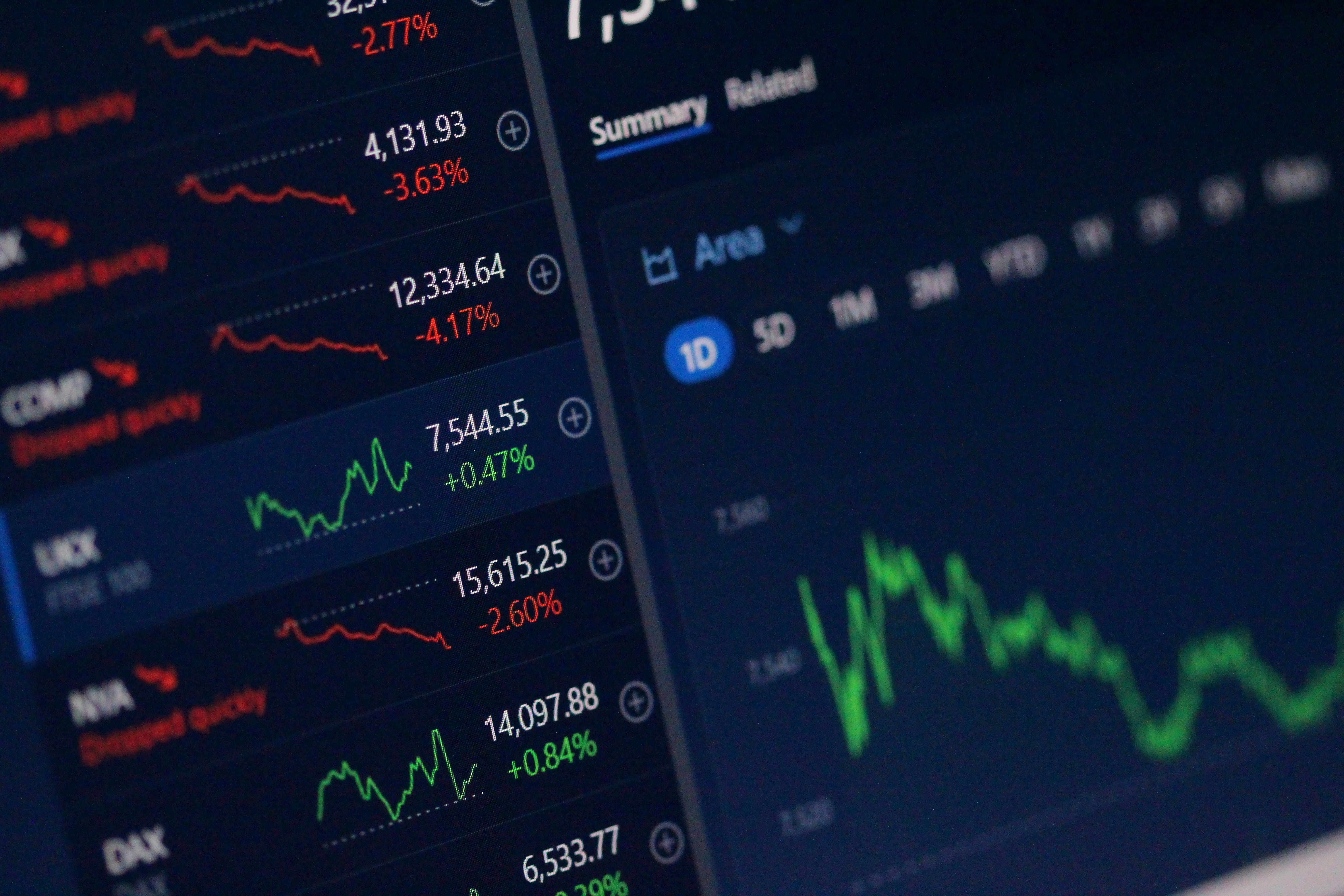
FXAIX trades once daily, at end-of-day net asset value. Buy in the morning, sell in the afternoon — you still get the same closing price as everyone else that day.
VOO and SPY trade continuously, like any stock. Price moves up and down all session.
For a long-term investor adding money every paycheck and never checking the price mid-day, this difference barely registers. For someone trying to time entries or exits, it changes everything.
There's a second wrinkle worth knowing. VOO automatically reinvests dividends, while SPY pays them out as cash, which can create what's sometimes called a "cash drag" if that cash sits idle before being reinvested.
Liquidity — Where SPY Earns Its Keep

If cost is SPY's weak spot, trading volume is its trophy case.
SPY manages over $641.5 billion in assets, trades tens of millions of shares daily, and carries bid-ask spreads that are often effectively zero. SPY's average daily volume runs near 81 million shares compared to VOO's roughly 10 million.
An active trader running options strategies cares deeply about that number.
A person putting $200 into a Roth IRA every month and walking away for thirty years does not.
"It's about function. SPY is a trading instrument built for liquidity and execution. VOO and IVV are long-term investment vehicles built for cost efficiency." — paraphrased from Trendspider's 2026 ETF comparison
Figure out which of those two you actually are before letting trading volume sway your pick.
Where Each One Actually Wins

FXAIX wins on raw cost — full stop. An expense ratio of 0.015% means paying roughly $1.50 a year for every $10,000 invested. If your 401(k) or brokerage account is at Fidelity, this is close to the cheapest S&P 500 exposure that exists anywhere.
The catch? FXAIX is a mutual fund only purchasable through a Fidelity account, and it doesn't trade on an exchange during market hours.
VOO wins on balance. VOO became the first ETF in history to cross $1 trillion in assets under management in June 2026, and its 0.03% fee sits close to FXAIX's while being portable across any brokerage — Fidelity, Schwab, Robinhood, wherever you land next.
SPY wins on liquidity and options access, and basically nothing else for a buy-and-hold investor.
Real Talk — Does This Choice Actually Move the Needle?
Yes and no, and both halves matter.
No, in the sense that all three hold nearly identical top positions — Nvidia, Apple, Microsoft, Amazon, Alphabet — and deliver tightly correlated performance. You won't pick a "wrong" one.
Yes, in the sense that fees compound silently, year after year, in a way that's invisible until you actually run the numbers — like in that chart above.
I'll say what I actually think: pick VOO if you're outside Fidelity, pick FXAIX if you're inside it. SPY solves a liquidity problem most long-term investors never run into.
That's not me dunking on SPY. The decision doesn't reflect differing views on the market — it's a choice between two methods of accessing the same benchmark. It's just that one method costs you nothing extra, and one quietly does.
A Small Math Exercise Worth Doing
Pull up your current brokerage balance. Multiply it by 0.0006 — that's the difference between SPY's fee and VOO's.
That number, every single year, for as long as you hold the position, is what SPY's extra cost is taking that VOO wouldn't.
On $40,000, that's about $24 a year. Doesn't sound like much.
Now multiply by 25 years and add the compounding effect of that $24 also being invested instead of spent on fees. Suddenly it's a real number — often several hundred dollars, sometimes more depending on growth rates.
Small leaks sink real ships, eventually.
What This Means for Building an Actual Plan
None of this matters in isolation. It matters as part of a system — how much you're putting in, how consistently, and what account it's sitting in.
If you're earlier in the journey and still working out how much to invest at eighteen to build real wealth, fund choice is a footnote compared to starting at all.
And if you've been wondering whether VOO specifically can realistically make you a millionaire, the short version: time and contribution size dwarf the 0.06% gap between VOO and SPY almost every time.
Still — between two funds doing the same job, paying less for the identical thing isn't a small preference. It's just math, and math doesn't care which fund you feel loyal to.
A Word on Risk, Because It's Real

All three of these funds carry the same underlying risk — they're 100% stocks, concentrated in large US companies, with information technology making up over 33% of total assets in both VOO and SPY.
If tech has a brutal year, all three feel it. Equally. That's not a flaw unique to one fund — it's the nature of owning the S&P 500 itself.
If you're trying to understand how that concentration risk plays out differently across investment types, the breakdown of risk types in investing with real examples and unsystematic risk explained are both worth fifteen minutes.
One Thing People Get Wrong About "Switching"
You can hold both VOO and SPY, but there's no real benefit — they hold the same stocks, so owning both is redundant and you'd just be paying a blended fee higher than necessary.
If you already own SPY and are wondering whether to switch to VOO or FXAIX, the honest answer involves checking for capital gains taxes that selling might trigger in a taxable account.
In a Roth IRA or 401(k)? Switch freely — no tax event. In a regular brokerage account with gains? Run the numbers before moving, because a tax bill today could outweigh years of fee savings.
If taxes and account types feel like a separate maze entirely, how a 401(k) gets handled when leaving a job and moving a 401(k) into an IRA while still employed cover ground that often overlaps with this exact question.
What Dave Ramsey and the Index Crowd Actually Agree On
It's rare territory, but on this specific point, both camps land close together.
For someone with a few hundred thousand dollars invested, even a tiny fee difference turns into real cash — that's the same logic behind every "pay yourself first" idea, just pointed at fund costs instead of savings rate.
If retirement math and withdrawal strategy interest you beyond fund selection, what Dave Ramsey says about Social Security at 62 and the four funds Ramsey actually recommends both touch on how fund-level decisions ripple into a full retirement plan.
Where to Actually Open the Account
If you don't already have a brokerage account, that's the actual first step — not which ticker to type in.
Vanguard vs Fidelity on a $300,000 investment breaks down how the two brokers themselves differ, separate from any single fund.
And if a low-cost money market option is sitting alongside this decision — say, for cash you're not ready to invest yet — low expense ratio money market funds is a useful companion read.
Information Without Action Is Just Entertainment
You now know more about FXAIX, VOO, and SPY than nearly everyone who actually owns one of them.
That knowledge is worth exactly nothing until it turns into an action — opening the account, picking the fund that fits where your money already lives, and setting up the next contribution.
Open your brokerage app. Check which of these three you can actually buy without extra fees. Buy it. The 0.06% gap between VOO and SPY won't make or break your future — but starting today versus starting "eventually" absolutely will.


Comments (0)
No comments yet.