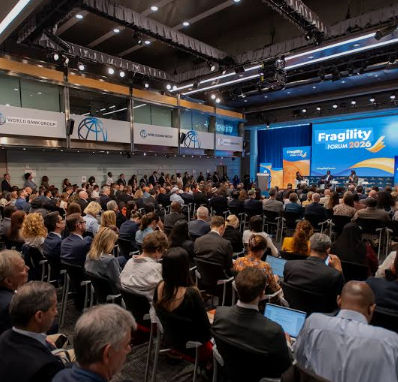
The World Bank just put a very big number on the table.
Up to $100 billion — ready to go to developing countries if the war involving Iran, the United States, and Israel keeps dragging on.
That announcement came Thursday, buried inside the World Bank's latest Global Economic Prospects report. But the number is anything but small.
What Is Actually Available Right Now
Not all $100 billion is sitting in a bag ready to hand out today.
Here is how it breaks down:
| Stage | Amount Available |
|---|---|
| Immediately available (existing instruments) | $50B – $60B |
| Pre-arranged funding (ready to deploy) | $25B |
| Full scale-up (over 15 months, if crisis deepens) | $80B – $100B |
So right now, $50 to $60 billion is already accessible through existing financing tools.
Another $25 billion is pre-arranged — meaning the paperwork is done and the money can move fast.
The full $80 to $100 billion only kicks in if the conflict and its economic damage keep growing — and the World Bank says it needs up to 15 months to deploy that full amount.
Why Developing Countries Need This
The Middle East conflict has not just been a regional problem.
Oil prices have swung wildly. Supply chains have taken hits. And the countries least able to absorb those shocks — the ones with the smallest buffers and the most debt — are the ones feeling it hardest.
World Bank Group President Ajay Banga did not sugarcoat it.
"Developing countries have faced a series of challenges over the last decade," he said.
His message was direct: protect people now, but do not sacrifice tomorrow's growth to do it.
"The basic test is the same — protect people and preserve stability today, without giving up on growth and jobs tomorrow," Banga said.
This Is Not Just a Cheque in the Mail
The World Bank is not simply writing cheques.
Banga outlined a mix of tools — liquidity, financing guarantees, and private-sector solutions — designed to hold economies steady while deeper support is arranged if things get worse.
"We are providing liquidity where it is needed now — and we are ready with additional financing, guarantees, and private-sector solutions if pressures deepen," he said.
That matters because simply dumping cash into fragile economies can create inflation, debt spirals, and dependency. The World Bank knows this. The approach here is structured, not panic-driven.
The Economist Who Sees Opportunity in the Crisis
Not everyone at the World Bank is in pure damage-control mode.
Ayhan Kose, deputy chief economist and director of the prospects group, made a point that might surprise you.
"The conflict has taken a toll on global activity — but every crisis also brings an opportunity," Kose said.
His argument: countries should use this moment to fix their economic foundations, not just survive the shock.
That means stronger policy frameworks, investment in infrastructure, faster business reforms, and pulling in private capital to create jobs at scale.
It sounds almost counterintuitive. But history backs it up — some of the strongest economic reforms in the developing world happened in the middle of, or right after, major crises.
What This Means for Africa
African nations are among the most exposed to Middle East conflict spillovers — through oil prices, food costs, and remittance flows.
The African Development Bank recently flagged that African banks have shown resilience, but the pressure is real. You can read more about that in our coverage of the AfDB trade finance report on African bank resilience and the 12 fastest-growing economies in Africa.
For Nigeria specifically, the ripple effects of global oil disruptions have already been felt at the pump and in the kitchen. The stakes of this World Bank intervention are very real — and very close to home.
The Bottom Line
The World Bank is not panicking — but it is prepared.
$100 billion is a serious signal to global markets that the institution is not going to let the Middle East conflict swallow developing economies whole.
Whether that money is ever fully deployed depends entirely on how the war plays out.
If things stabilise, much of it stays unspent. If they do not, the World Bank says it is ready to move — fast.
Either way, the message from Washington is clear: the world's most vulnerable countries will not be left to deal with this alone.
Reported with reference to the World Bank's Global Economic Prospects report (June 2026), and statements from World Bank Group President Ajay Banga and Deputy Chief Economist Ayhan Kose. Additional context from Reuters and Bloomberg.
— WealthBlueprint NewsDesk